


Table of Contents
In the intricate world of Irezumi (traditional Japanese tattooing), few motifs command as much respect and fascination as the snake, known as Hebi. A japanese snake tattoo is not merely a piece of skin art; it is a profound narrative of transformation, protection, and ancient folklore. Whether you are a seasoned collector or a first-timer, understanding the layers of history behind this slithering guardian is essential before the needle ever touches your skin.
At high-end studios, we often see the snake chosen for its incredible flow. Unlike static designs, the Hebi is fluid, allowing it to wrap around the limbs or torso in a way that feels organic and alive. In this guide, we will explore the deep meanings, traditional styles, and design variations that make this motif a cornerstone of Japanese tattoo culture.
Deep Dive into Japanese Snake Tattoo Meaning
In Japanese culture, the Hebi (snake) tattoo is far more than a visual choice; it is a powerful emblem of protection, wisdom, and renewal. Revered as a sacred guardian, the snake is believed to shield the wearer from illness and misfortune while inviting good luck. Central to its symbolism is the act of shedding skin, which serves as a profound metaphor for rebirth and the ability to heal from the past.
Core Symbolism:
Guardianship: As messengers of the goddess Benzaiten, snakes are thought to ward off evil and bring divine favor.
Metamorphosis: They represent personal evolution and the strength to overcome adversity.
Intellect: The snake is often depicted as a protector of hidden knowledge and a symbol of sharp intuition.
The Divine Feminine: In many traditions, they are linked to fertility and feminine power.
Design Elements & Placement: White snakes are viewed with particular reverence as holy messengers. When paired with Peonies, the design emphasizes wealth; with Cherry Blossoms, it highlights the fleeting nature of life; and with Chrysanthemums, it signifies longevity. Whether wrapped around an arm for protection or across the back to mark a life-changing triumph, the Hebi remains a cornerstone of traditional Irezumi.
Traditional vs. Modern Execution
When you walk into a professional studio to request a traditional japanese snake tattoo, you aren’t just asking for a picture; you are asking for a specific artistic language.
The Roots of Irezumi
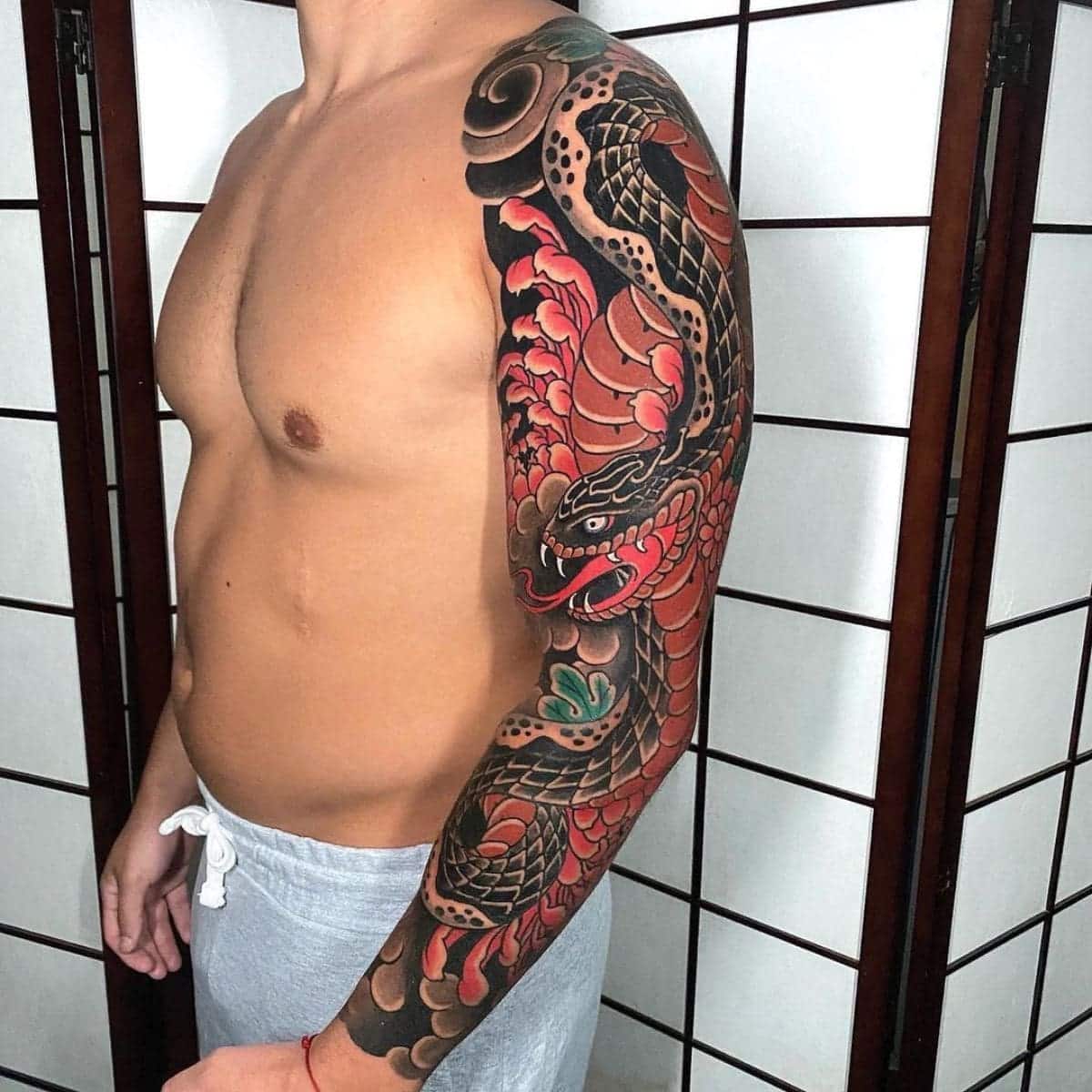
A traditional piece is characterized by bold, saturated lines and a heavy use of “background” elements. In Irezumi, the snake is rarely floating in empty space. It is usually paired with wind clouds (kumo), water waves, or rocks. These elements don’t just fill space; they provide “flow” and tell a story of the snake’s environment.
The Foundation: The Outline
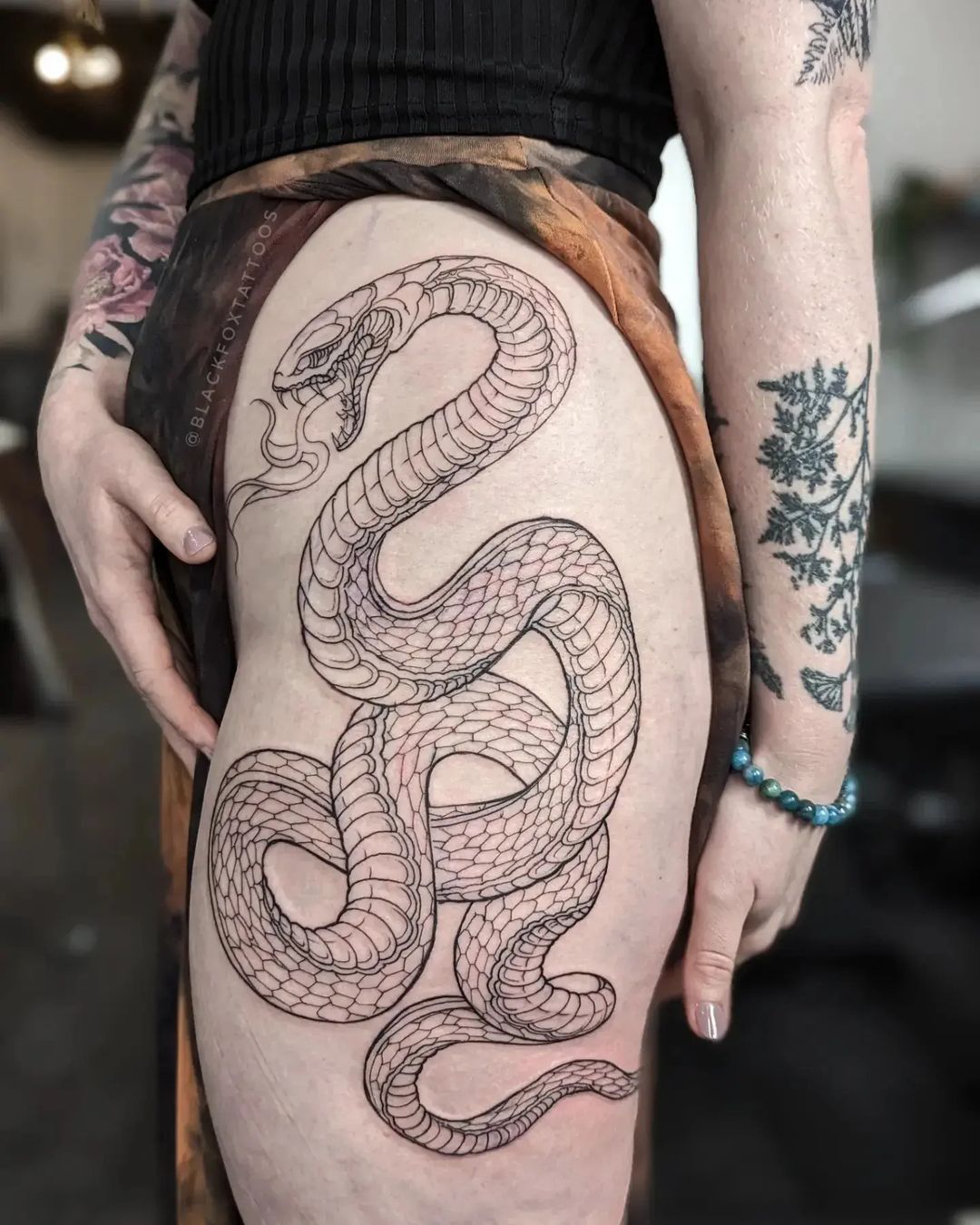
The secret to a tattoo that lasts fifty years is a solid japanese snake tattoo outline. Expert artists focus heavily on the “line weight.” A strong outline ensures that as the ink spreads naturally over decades, the snake remains legible and doesn’t turn into a blurry smudge. This structural integrity is what separates a master’s work from an amateur’s.
Visual Styles and Color Palettes
The way you choose to color your snake can completely change the “energy” of the tattoo.
Black and Grey Elegance
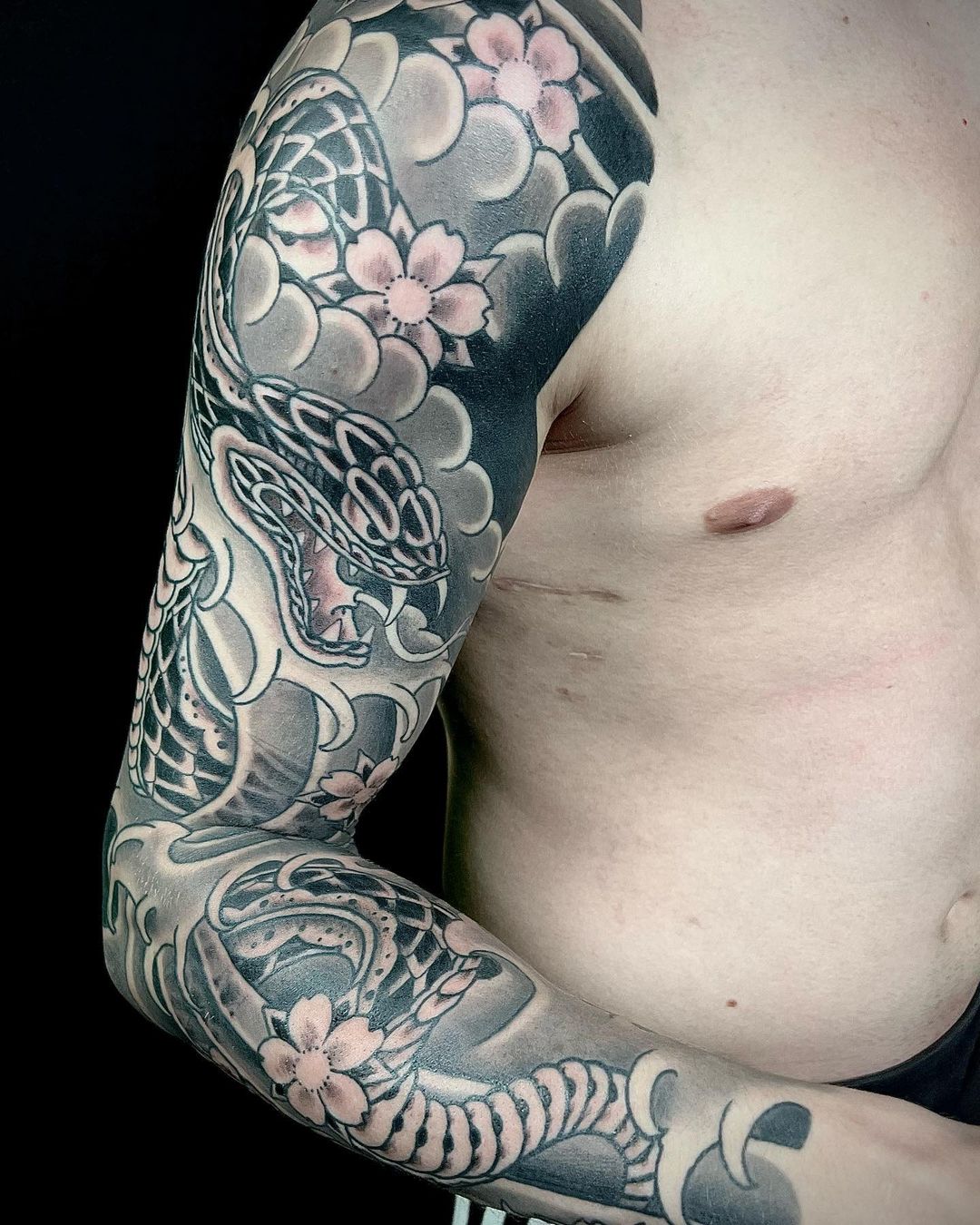
For those who prefer a more subtle and timeless aesthetic, the japanese snake tattoo black and grey style is unmatched. Using varied dilutions of black ink, an artist can create a “stone-carved” look. This style focuses on contrast and the interplay of light and shadow on the snake’s scales, giving it a three-dimensional, statuesque appearance.
Vibrant Variations: The Power of Red
If you want your tattoo to “pop,” color is your best friend. A japanese red snake tattoo is particularly striking. In Japanese culture, red is the color of protection and vitality. A red snake can symbolize a more aggressive or passionate energy, acting as a fierce talisman against evil spirits.
Intricate Design Elements
A professional japanese snake tattoo design requires a deep understanding of anatomy. The scales (uroko) are meticulously drawn, often following a rhythmic pattern that emphasizes the snake’s coil. We often see artists using “broken” scales or varying patterns to indicate where the snake is turning, adding to the realism of its movement.
Common Pairings and Compositions
Pairing the snake with other motifs is a standard practice that enriches the tattoo’s symbolism.
Japanese Snake and Flower Tattoo: This is perhaps the most popular composition.
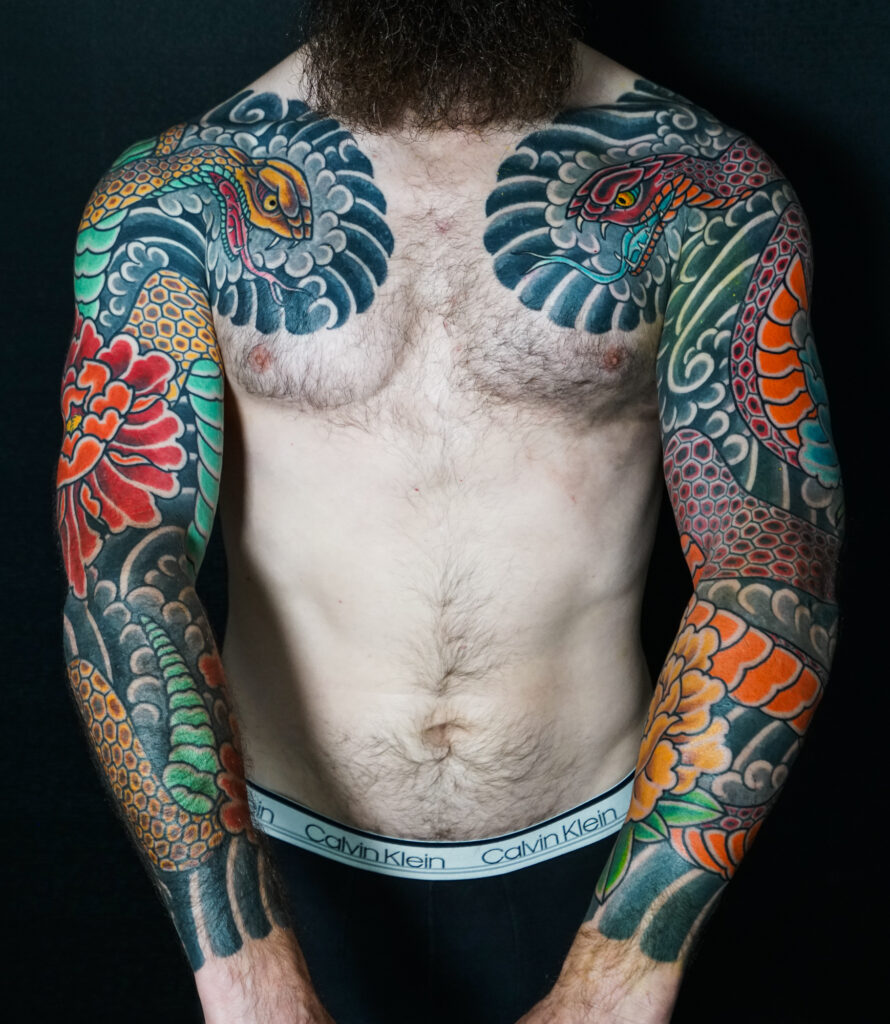
Peonies (Botan): Known as the King of Flowers, pairing them with a snake represents a balance of power and wealth.
Chrysanthemums (Kiku): These flowers represent longevity and a noble heart, contrasting beautifully with the snake’s more primal energy.
Cherry Blossoms (Sakura): These signify the fleeting nature of life, reminding the wearer to appreciate the present moment.
The Battle Motif: For larger pieces like a full back-piece or a suit, snakes are often depicted in battle with eagles or dragons. These designs represent the internal struggle between heaven and earth, or logic and instinct.
Expert Advice for Your Tattoo Journey
If you are planning to get a japanese snake tattoo, here are three practical tips from the industry:
- Consider the Wrap: A snake is one of the few designs that can wrap 360 degrees around a limb. Talk to your artist about how the head and tail will meet. This “circular” flow is a hallmark of high-quality Japanese art.
- Respect the Culture: While modern twists are welcome, the core elements of the Hebi have stayed the same for centuries. Looking at woodblock prints (Ukiyo-e) from the Edo period can give you great inspiration for authentic poses.
- Think Long Term: Because snake designs involve many small scales, they require a certain amount of space. Avoid going too small, or the details will get lost over time. A “simple” japanese snake tattoo outline on a larger scale is often more impactful than a tiny, over-detailed one.
Conclusion
The japanese snake tattoo remains one of the most enduring symbols in the world of tattooing for a reason. It is a perfect marriage of aesthetic beauty and profound meaning. Whether it’s a small japanese snake tattoo black and grey on the forearm or a massive traditional japanese snake tattoo across the back, the Hebi will always be a powerful statement of the wearer’s journey through life, death, and rebirth.
By choosing the right artist—someone who understands the flow, the mythology, and the technical requirements of Irezumi—you ensure that your snake tattoo will be a masterpiece you carry with pride forever.
The hangout tattoo studio – Traditional tattoo style by us.
Adress: 25 An Thượng 4, Đà Nẵng City
- Tel: +84348040194
- Booking: https://thehangouttattoo.com/danang/
Adress 302 Cửa Đại, Hội An Ancient town
- Tel: +8498855302
- Booking: https://thehangouttattoo.com/hoian/

 Tiếng Việt