


Table of Contents
Choosing the right tattoo ink is a bit like picking out clothes certain colors “pop” more depending on your skin’s undertone (cool, warm, or neutral) and the amount of melanin present.
While you can technically get any color you want, understanding how ink sits under your skin (not on top of it) will help you pick a design that looks vibrant for years.
1. Tattoos by Skin Tone
| Skin Tone | Best Colors | Colors to Watch Out For |
| Fair / Light | Reds, oranges, deep greens, and purples. Even soft pastels show up well. | Very light yellows or whites can sometimes look like scars once healed. |
| Medium / Olive | Jewel tones (emerald, sapphire), bold oranges, and vibrant blues. | Earthy browns or certain greens may blend in too much with olive undertones. |
| Deep / Dark | Royal blues, deep purples, crimson reds, and high-contrast black/grey. | Pastels and light pinks often “ash out” or disappear as the skin heals over the ink. |
2. Pro-Tips for Longevity
-
The “Filter” Effect: Think of your skin tone as a tinted piece of glass sitting over the tattoo. The darker the glass, the more it will “mute” the colors underneath. This is why high-contrast designs (bold lines and saturated colors) usually age best on deeper skin tones.
-
Identify Your Undertone:
-
Cool: Look for blues, purples, and “cold” reds.
-
Warm: Look for oranges, earthy greens, and “warm” reds.
-
-
The Power of Black: Regardless of skin tone, black ink is the most stable and provides the best contrast. A strong black outline acts as a frame that helps colors stay distinct over time.
3. Important Considerations
- Sun Exposure: UV rays are the “tattoo killer.” Regardless of your color choice, sunscreen is mandatory if you want those pigments to stay sharp.
- The “Color Test”: If you’re unsure how a color will look, ask your artist for a color swatch test—a small row of dots in an inconspicuous area—to see how they heal on your specific skin.
A Note on White Ink: White ink is notoriously fickle. On pale skin, it can look like a faint scar; on dark skin, it often heals to a yellowish or translucent tan. Use it sparingly for highlights rather than as a primary color.
4. Neo-Traditional Palettes by Skin Tone
Neo-Traditional is arguably the best style for color experimentation because it combines the “bulletproof” techniques of Traditional tattooing (bold black outlines) with a much more expansive, lush color palette.
Unlike the “Big 3” colors of old-school tattoos (Red, Yellow, Green), Neo-Traditional uses illustrative shading and “transition colors” to create depth.
Because this style relies on high saturation, it can be adapted beautifully for everyone. Here is how to play with the Neo-Traditional look:
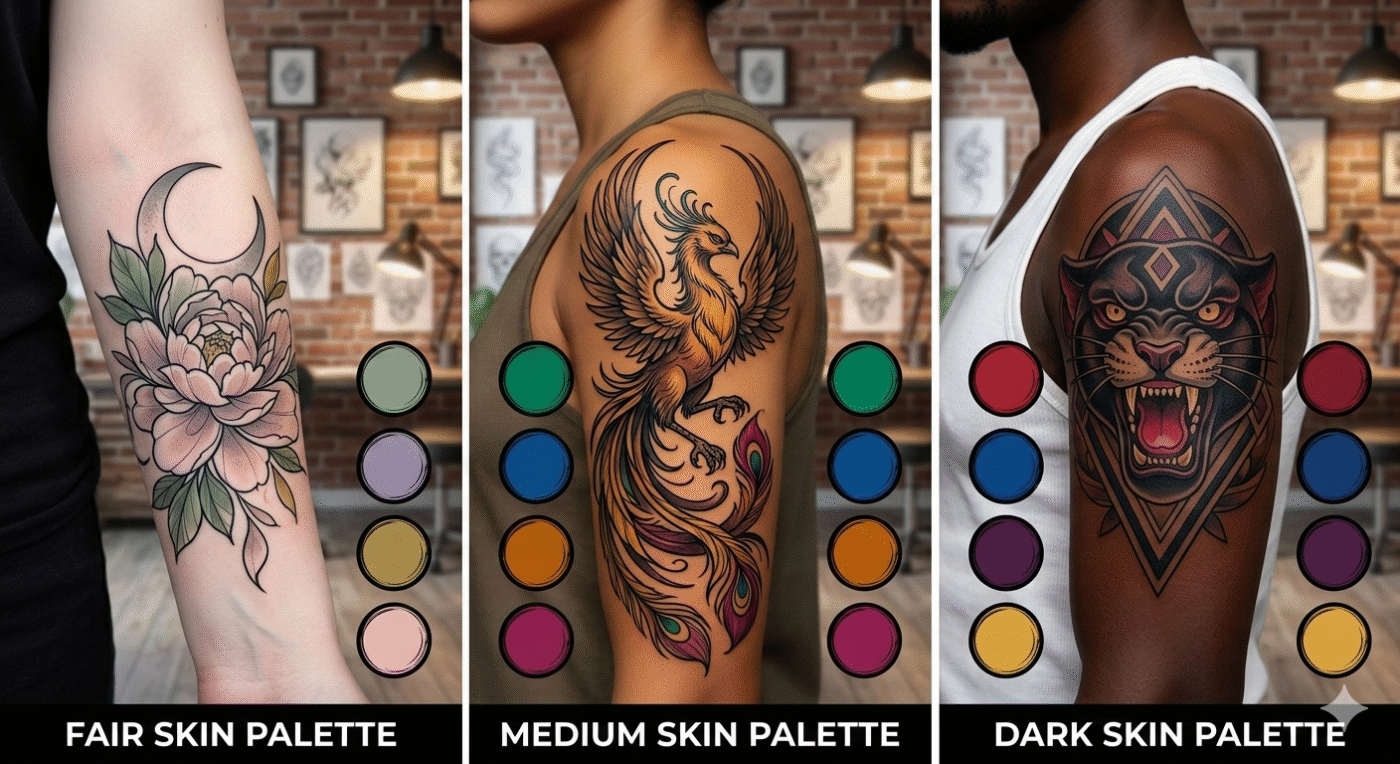
Fair to Light Skin
You have the most flexibility with “muted” and desaturated tones.
- The Look: Dusty roses, sage greens, and pale lavenders.
- Why it works: These subtle colors won’t get “lost” on pale skin, allowing for complex, painterly gradients in things like flower petals or animal fur.
Medium to Olive Skin
Olive skin has natural warmth, so you want colors that won’t turn “muddy” when they settle.
- The Look: Jewel Tones. Think deep teals, burnt oranges, and rich magentas.
- Why it works: Bold, warm pigments complement the gold/green undertones of olive skin. Avoid too much muddy brown, as it can blend into your natural skin tone.
Deep to Dark Skin
Neo-Traditional is stunning on deep skin when the artist focuses on vibrancy and contrast.
- The Look: Royal purple, crimson, deep indigo, and golden yellow.
- Why it works: These “heavy” pigments hold their own against melanin. The key here is the bold black linework—in Neo-Traditional, that black frame makes the deep colors appear much brighter than they would on their own.
5. Key Features of Neo-Traditional Color
If you are talking to an artist about a Neo-Traditional piece, keep these three elements in mind:
- Line Weight Variety: Unlike traditional tattoos, Neo-Trad uses varying line thicknesses. This “weighted” line helps separate the colors and makes the design readable from across the room.
- Limited “Skin Break”: This style usually “packs” color in, leaving less open skin. This is great for color lovers, but ensure your artist uses enough black shading to prevent the tattoo from looking like a flat sticker.
- Earth Tones vs. Neons: Neo-Traditional usually leans toward “organic” but saturated colors (e.g., ochre, forest green, burgundy) rather than neon or “electric” colors.
Common Neo-Traditional Subjects
To get your inspiration going, here are subjects where this color style really shines:
- Lady Heads: Uses skin-tone shading and ornate, colorful headpieces/flowers.
- Animals: Allows for “unnatural” but beautiful color shifts (e.g., a blue fox or a purple owl).
- Botanicals: Deeply saturated leaves and multi-tonal flowers.
The hangout tattoo studio – Traditional tattoo style by us.

 Tiếng Việt